Definition of MSPs
A Managed Service Provider is a third-party company that remotely manages a customer’s IT infrastructure and end-user systems, providing a range of services to improve business operations. These services can include network management, data backup and recovery, cybersecurity measures, and IT support among others. MSPs operate on a subscription model, which allows businesses to budget their technology expenses more effectively and often results in cost savings compared to maintaining an in-house IT team. Businesses can begin by completing an MSP assessment to identify their IT requirements before evaluating providers.
Importance of MSPs in Modern Business
As businesses increasingly rely on technology, the role of MSPs becomes even more pivotal. The digital transformation journey necessitates that companies adapt to new technologies quickly and efficiently. MSPs offer specialized expertise and resources that many businesses lack internally, enabling them to stay competitive in their respective industries. Moreover, MSPs help in mitigating risks associated with cybersecurity threats and data loss, providing reassurance to business owners that their operations are secure and compliant with industry regulations. Understanding the MSP selection process can help businesses evaluate providers based on their technical needs and long-term goals.
Overview of MSP Market in the US
Current Number of MSPs in the Market
The U.S. managed service provider market includes thousands of companies serving businesses across a wide range of industries. These providers range from small, specialized IT firms to large organizations offering comprehensive managed IT services. With so many options available, businesses need to evaluate providers based on their technical capabilities, industry experience, service offerings, and ability to meet specific IT requirements.
Geographical Distribution of MSPs
MSPs are distributed unevenly across the United States, with a concentration in metropolitan areas where businesses are more likely to seek advanced technological solutions. States like California, Texas, Florida, and New York host a high number of MSPs, reflecting the local demand for managed IT services. However, there are also emerging markets in other regions, as more businesses recognize the benefits of outsourcing their IT needs, regardless of geographical constraints.
Company Size and Structure of MSPs
Employee Count in US MSPs
Many managed service providers use recurring service agreements that give businesses more predictable monthly IT expenses. Pricing can vary based on the number of users or devices supported, service levels, cybersecurity requirements, and the complexity of the IT environment. Understanding what’s included in an MSP’s pricing model helps businesses compare providers and avoid unexpected costs.
How MSPs Structure Their Services and Pricing
Revenue generation in the MSP industry is equally diverse. Small to mid-sized MSPs may generate annual revenues ranging from $1 million to $10 million, while larger players can see revenues exceeding $100 million. The continued growth of subscription-based pricing models has allowed many MSPs to stabilize their income, which provides a predictable revenue stream and fosters long-term client relationships.
Key Characteristics of Large vs. Small MSPs
Large MSPs typically offer a broad range of services, including advanced solutions such as artificial intelligence and machine learning. They often have extensive resources and capabilities, allowing them to serve large enterprises with complex needs. In contrast, small MSPs may focus on providing personalized services tailored to the specific needs of local businesses. They often pride themselves on building strong, collaborative relationships with their clients, resulting in high levels of customer satisfaction and loyalty.
Customer Retention in the MSP Sector
Average Customer Retention Length
Customer retention is an important consideration in the MSP industry because managed IT services often involve ongoing relationships. Businesses typically benefit from providers that understand their technology environments, communicate proactively, and consistently meet service expectations. However, the length of an MSP relationship varies based on service quality, changing business requirements, and the terms of the service agreement.
Factors Influencing Customer Loyalty
Several factors contribute to customer loyalty within the MSP market. High-quality service delivery, consistent communication, and responsiveness to client needs are paramount. Additionally, the ability of an MSP to scale its services as a business grows can significantly impact customer satisfaction. Offering customized solutions tailored to the unique challenges faced by clients often leads to stronger long-term relationships, ultimately enhancing retention rates.
Lessons Learned from MSP Experiences
Common Challenges Faced by MSPs
Despite the promising nature of the MSP industry, providers face several challenges. One of the most significant hurdles is keeping up with the rapid pace of technological advancement. As new technologies emerge, MSPs must continually invest in training and development to ensure their teams are equipped to support evolving client needs. Additionally, cybersecurity threats remain a concern, requiring MSPs to stay vigilant and proactive in safeguarding their clients’ data.
Successful Strategies for MSP Growth
To navigate these challenges effectively, many MSPs employ growth strategies such as diversifying their service offerings, automating processes, and enhancing customer service. By broadening their portfolios to include emerging technologies like cloud services or cybersecurity solutions, MSPs can attract a broader client base. Furthermore, investing in automation tools allows MSPs to streamline operations, reducing labor costs and improving service delivery efficiency.
Technology Platforms That Support MSPs
Managed service providers often rely on specialized technology platforms to deliver consistent IT support. Companies such as Datto and ConnectWise provide tools that MSPs use for functions including remote monitoring, IT management, backup, and service delivery. These technologies can help MSPs manage client environments more efficiently, but the quality of service ultimately depends on how effectively each provider uses its tools, expertise, and processes.
Conclusion
Future Trends in the MSP Market
The MSP market is poised for continued growth as businesses increasingly recognize the need for specialized IT support. Emerging technologies, such as artificial intelligence and machine learning, will shape the future of MSP services, creating new opportunities and challenges. As cyber threats become more sophisticated, MSPs will also need to enhance their cybersecurity offerings to protect their clients effectively.
Final Thoughts for Business Owners
For business owners, collaborating with an MSP can yield significant advantages, including improved operational efficiency, enhanced security, and cost savings. Understanding the MSP landscape, including the types of services available and the factors that contribute to successful partnerships, is essential for making informed decisions. As the industry evolves, staying abreast of trends and best practices will empower business leaders to leverage the full potential of managed services. MSPwiz helps businesses find a managed IT service provider that aligns with their requirements.
Managed Service Provider (MSP) FAQs
Our FAQ section provides essential information to help you navigate the world of Managed Service Providers (MSPs).
Here, you’ll find answers to common questions about the types of services offered by MSPs, such as network management, cybersecurity, data backup and recovery, and IT support.
We also explore how to choose the right MSP for your business by considering factors like experience, service offerings, and customer feedback.
Additionally, we highlight the benefits of working with an MSP, including enhanced security and operational efficiency. If you’re curious about how MSPs can bolster your cybersecurity efforts or what typical contract lengths look like, this section has you covered.
Whether you’re seeking guidance on finding the right technology partner or understanding the value an MSP can bring, our FAQ is your go-to resource for all things related to managed services.
What types of services do Managed Service Providers offer?
Managed Service Providers typically offer a range of services such as network management, cybersecurity, data backup and recovery, cloud services, and IT support. Their goal is to help businesses manage their IT infrastructure more efficiently.
How do I choose the right MSP for my business?
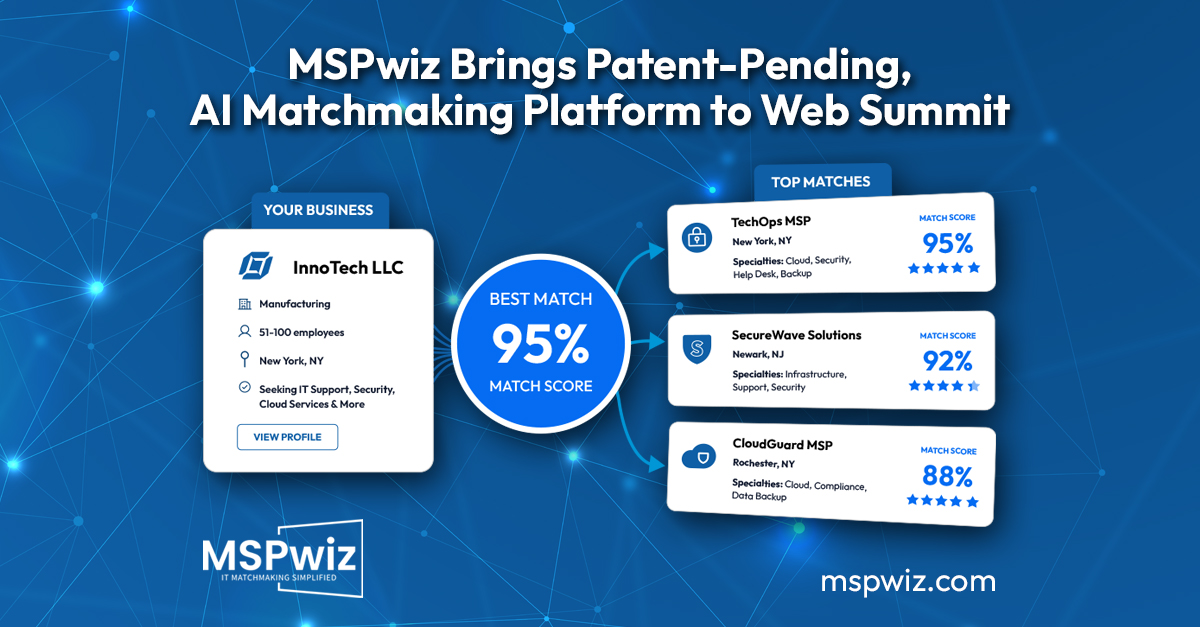
Start by identifying your business’s IT requirements, including technical support, cybersecurity, cloud services, and future growth needs. Then evaluate potential MSPs based on their expertise, industry experience, service offerings, responsiveness, and ability to support your business. MSPwiz simplifies this process through free, AI-powered matchmaking that helps businesses identify managed service providers aligned with their specific requirements.
What are the benefits of using an MSP?
The benefits of using an MSP include access to specialized expertise, cost savings, enhanced security, improved operational efficiency, and the ability to focus on core business activities while leaving IT management to professionals.
How can MSPs help with cybersecurity?
MSPs can help businesses strengthen cybersecurity through services such as threat monitoring, data protection, security updates, backup and recovery, and incident response planning. The specific protections available vary by provider and service agreement. Businesses with regulatory requirements should also verify that prospective MSPs have the experience and capabilities needed to support their compliance obligations.
What is the typical contract length with an MSP?
Contract lengths with MSPs can vary widely but typically range from one to three years. Longer contracts may offer better pricing and stability, while shorter contracts can provide flexibility for businesses to reassess their needs as they evolve.
Understanding what managed service providers do is the first step. Finding one that fits your business’s unique IT requirements is the next.
MSPwiz makes MSP selection easier with a free, AI-powered matchmaking platform designed to connect businesses with managed IT service providers based on their needs, priorities, and technical requirements.
Ready to find your ideal IT partner?
Get Started with MSPwiz or Schedule a Free Consultation.